
Some Dietary Dangers

Eating a healthy diet is one of the most important factors in achieving and maintaining good health. In another article, I highlighted some good dietary principles. (To read that article, click here: Link). While it’s important to know what to eat to maintain good health, it’s also important to understand what not to eat. These are but some of the dietary dangers to look out for:

1) Do not eat commercially processed foods such as cookies, cakes, crackers, TV dinners, soft drinks, packaged sauce mixes, etc. Read labels!

2) Avoid all refined sweeteners such as sugar, dextrose, glucose, high fructose corn syrup and fruit juices.

3) Avoid white flour, white flour products and white rice.

4) Avoid all hydrogenated or partially hydrogenated fats and oils.

5) Avoid all industrial polyunsaturated vegetable oils made from soybean, corn, safflower, canola or cottonseed.

6) Avoid foods cooked or fried in polyunsaturated oils or partially hydrogenated vegetable oils.

7) Avoid lean meat, skinless poultry, reduced-fat milk and egg whites without the yolks. Consumption of protein without the cofactors occurring in animal fats can lead to deficiencies, especially of vitamin A.

8) Avoid factory-farmed eggs, meats and fish.

9) Avoid highly processed lunch meats and sausage.

10) Avoid rancid and improperly prepared seeds, nuts and grains found in granolas, quick rise breads and extruded breakfast cereals, as they block mineral absorption and cause intestinal distress.

11) Avoid artificial food additives, especially MSG, hydrolyzed vegetable protein and aspartame, which are neurotoxins. Most soups, sauce and broth mixes and most commercial condiments contain MSG, even if not indicated on the label.

12) Minimize caffeine and related substances in coffee, tea and chocolate.

These selected bullet points are taken from an article written by Sally Fallon with the Weston A. Price Foundation titled “Dietary Dangers.”

To read an article on the diets of indigenous people (diets before the age of industrialization), click here.
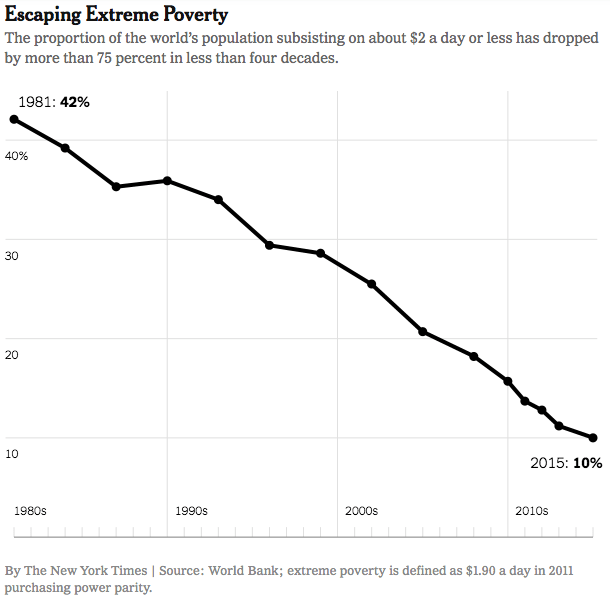
2019 Was Likely the Best Year Ever for Humanity

As we enter the 20s, it’s easy to look back at the last decade and think about all the things that went wrong, but it’s important we recognize all the things that went right. In the grand scheme of things, the world just keeps getting better and better. In fact, 2019 may very well have been the best year ever so far in all of human existence. For example: “Every single day in recent years, another 325,000 people got their first access to electricity. Each day, more than 200,000 got piped water for the first time. And some 650,000 went online for the first time, every single day.” Literacy rates continue to climb, and the percentage of the population living in extreme poverty just keeps dropping. I’m eager to see what 2020 brings.

Click here to read more: Link.

How the Saturn V Rocket Works

The Saturn V rocket is what took the Apollo program astronauts to the Moon. Have you ever wondering how the rocket works and what the various stages and parts and pieces are? Here is a short video that quickly explains it: Link.

In Part 2, they go on to discuss how the astronauts then landed on the Moon: Link

I’m Part 3, they discuss how the astronauts got back home from the Moon: Link.

Image credit: NASA

Helpful Perspectives When Overcoming a Loss

I recently broke my arm and have come to many helpful conclusions on my healing journey. It’s important to realize that when we suffer any type of loss in life, there are two hurdles that must be crossed in order to heal and move on. First, we must come to terms, mentally speaking, with what has happened and learn to accept it. The quicker you can do this, the sooner you’ll be on the path back to good health and good spirits. This isn’t always easy and it helps to consider that you cannot change the past, but you can definitely change the future and how you react to loss. The second part is getting over the physical aspect of the loss. Everything I do takes significantly longer. Learning how to dress myself, eat, write, and use a computer with only one arm and one hand (the non-dominant one at that) is no easy task. Thankfully I have an angel of a wife taking care of me and parents and parents-in-law who come visit and help with the chores, and good friends who are there with a hand and a wish that I make a quick and healthy recovery. Learning how to go about my day with one arm out of commission will take time and practice. With any loss, overcoming the mental AND physical aspects must be tackled in order to move on.

Another lesson to learn from this is the importance of patience. I know that my body is doing the best it possibly can. Healing bones takes time; there’s no way around it. Patience is a virtue. When driving through town with my arm still sore, we had to drive slowly or else the jarring from road bumps would cause extreme pain. Many a car would impatiently tail us, pass our car and on a number of occasions let out a honk of disapproval. Their honks didn’t bother me because I knew if I could only explain the situation to them they would feel ashamed to have honked at us, and had they known they wouldn’t have honked in the first place. Heck, I wish we could have driven faster so as not to be an inconvenience. No one on the road wanted the situation, yet here we were. For a moment, I tried to consider the situation from the other drivers’ perspective, but with the knowledge of what was going on. How would I react? I would give them the space and time they need. I know the other drivers would do the same, if they only knew. So why not just make it a habit to assume the driver you’re angry with isn’t actually being an asshole, but is simply doing what they can to make the best of a bad situation. If we only took the time to be patient, we might begin to see things from the other perspective, or at the very least, not make an already poor situation a worse one.

The last thing I realized was how important it is to acknowledge and be thankful for all the things that are going right. Sure, having a broken arm is no fun but in the grand scheme, my life is full of things to be happy about: I have a loving wife, family and friends, a roof over my head, the best dog ever, a job that was accommodating to my situation, and great coworkers who helped me get back on my feet. In the words of Charles Dickens, “Reflect upon your present blessings.” To do so helps you put your situation in perspective and hopefully what may seem like an impossible journey ends up feeling like a manageable bump in the road.